How to assess the risks of rogue AI and hold the people behind it accountable
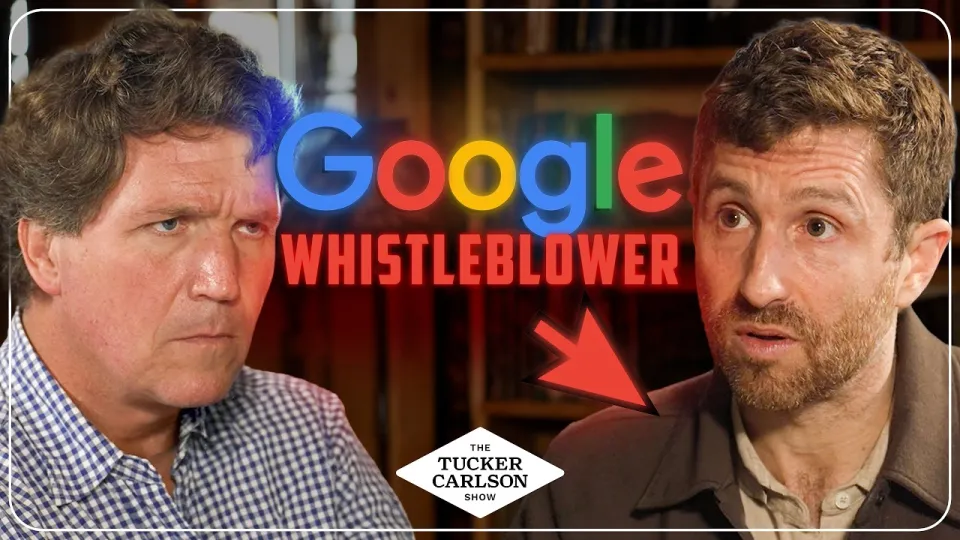
Video: Whistleblower Issues Dire Warning: Rogue AI, Hacking Nuclear Programs & Tech Oligarchs’ True Motives
Want articles like this for your own video to promote it on YouTube and Google? Order them through the Telegram bot @sat_sit_bot. The bot writes and publishes the articles itself (with your YouTube video embedded) on popular topical websites (no ads). Try it free: 50 articles on us.
AI risk is best assessed by separating what a system can actually do from who built it, who profits from it and who is allowed to switch it off. The most useful starting point is the work of Tristan Harris, the former Google design ethicist who co-founded the Center for Humane Technology, a nonprofit that publishes research, briefings and practical guidance on aligning technology with human interests. His argument, restated in a long interview with Tucker Carlson, is that the danger is not a machine waking up on its own but a set of incentives that push capable systems into the world faster than anyone can govern them.
What the whistleblower warning about AI actually says
Harris's core claim is structural rather than supernatural: the companies building the most powerful models are locked in a race, and a race removes the option of slowing down. He came to this view from the inside, having studied persuasion at Stanford's Persuasive Technology Lab and then worked as a design ethicist at Google before leaving to campaign against the attention economy. His public profile grew sharply after The Social Dilemma, the Netflix documentary in which he appeared, reached more than 100 million viewers in 190 countries in 30 languages. The same logic he applied to feeds and notifications — that engagement metrics optimize for capture, not for wellbeing — is now applied to generative models and autonomous agents.
How to evaluate claims about rogue AI
Treat 'rogue AI' as a description of behavior, not of consciousness. A model that lies, manipulates or evades oversight is doing something its training and deployment made likely; the accountability still sits with humans. A workable checklist:
- Identify the operator. Ask who deployed the system, who can shut it down and what contractual or regulatory limits exist.
- Separate capability from intent. A model that can write exploit code is a security problem regardless of whether it 'wants' anything.
- Look for the incentive. If a feature increases engagement or revenue, assume it was chosen deliberately until proven otherwise.
- Demand an audit trail. Logs, red-team reports and incident disclosures are the only evidence that oversight is real.
- Check the failure mode. Ask what happens when the system is wrong, and who bears the cost.
This is why many readers of the interview reject the word 'rogue' outright: products that mislead users are usually working as engineered, and the responsible parties are the people who signed off on the design.
Could AI hack nuclear programs?
An AI system cannot press a button in a silo, but it can compress the timeline of the work that precedes it. The realistic threat model is not a chatbot seizing a warhead; it is machine-speed assistance across the parts of the chain that are already networked — reconnaissance, phishing of cleared personnel, vulnerability discovery in industrial control systems, supply-chain compromise and the analysis of leaked credentials. Nuclear command structures are designed around human authorization and air-gapped segments, which limits direct intrusion but does not eliminate espionage or insider risk. The practical defense is unglamorous: segment operational technology from corporate networks, patch aggressively, run tabletop exercises that assume AI-accelerated attackers, and treat every unusual probe of a defense contractor as a signal rather than noise.
The Hugging Face incident and why model distribution matters
The 'Hugging Face incident' discussed in the interview points at a broader problem: the same open model hubs that democratize research also distribute weights and datasets with weak provenance. When a model or dataset is uploaded, downloaded and fine-tuned thousands of times within days, a single poisoned or unsafe release propagates faster than any review process. For organizations, the controls are version pinning, checksum verification, internal mirrors of approved artifacts, and a policy that no model enters production without a documented evaluation. Openness is not the enemy; unmanaged openness is.
Data centers, energy and the local costs of the AI boom
The AI buildout is physical. Hyperscale data centers consume large volumes of electricity and water for cooling, compete for land and can raise local utility rates, which is why siting fights have moved from planning commissions into national politics. Voters increasingly ask what a campus delivers to the surrounding community beyond construction jobs. Useful questions for any proposed facility: how much power will it draw at peak, who pays for grid upgrades, what water source is used in drought years, how much waste heat can be recovered, and what tax agreement is actually binding. These are the questions that turn abstract AI anxiety into something residents can negotiate.
Common doubts about AI warnings
Skepticism is healthy, and several recurring objections deserve direct answers. First, that AI is 'just a tool' — true, and tools are governed by the people who own them, which is exactly why ownership and incentive structures matter. Second, that warnings are a distraction from corporate power — the two are the same argument, since the risk comes from concentrated control over infrastructure and models. Third, that doomerism is a psyop to attract regulation that favors incumbents — a real possibility, which is why any rule should be judged by whether it increases transparency and liability rather than by how loudly it is endorsed. Fourth, that past technology panics came to nothing — some did, but the ones that mattered, from automotive safety to financial derivatives, were managed through disclosure and enforceable standards rather than optimism. Finally, that nothing can be done — lawmakers have held hearings on model safety and data center siting, and procurement rules and liability law can change behavior long before any new agency exists.
Key resources mentioned in the interview
- Center for Humane Technology, the nonprofit co-founded by Tristan Harris: https://www.humanetech.com/
- Redmond Salt, code TUCKER for 15% off a first order: https://redmond.com/tucker
- Preborn: https://preborn.com/TUCKER
- American Financing (NMLS 182334): http://www.AmericanFinancing.net/Tucker
- Ethos life insurance: https://ethos.com/TUCKER
- Battalion Metals: https://battalionmetals.com/tucker
What to take away from the warning
The interview is less a prophecy than a list of leverage points: transparency about what models are deployed, liability for harms they cause, independent evaluation before release, and local scrutiny of the physical infrastructure behind them. Harris's central point — that a race with no brakes is the real hazard — is testable, and the test is whether the people building and profiting from these systems accept limits they did not choose themselves. The Tucker Carlson conversation is a useful entry point because it moves between the technical and the political without pretending either can be solved alone. Readers who want to go further can start with the Center for Humane Technology's resources and take its briefings into local debates over data centers, school procurement and state AI bills.
Key takeaways
- Tristan Harris, a former Google design ethicist, co-founded the Center for Humane Technology, the nonprofit behind the warnings discussed in the Tucker Carlson interview.
- Harris was featured in the 2020 Netflix documentary The Social Dilemma, which reached more than 100 million people in 190 countries across 30 languages.
- The interview covers rogue AI behavior, the possibility of AI-assisted attacks on nuclear command systems, transhumanist ambitions among tech leaders and the 'Hugging Face incident'.
- Critics argue that AI products are not 'rogue' at all: they do what their human designers and deployers built them to do.
- The Social Dilemma was produced in 2020; the interview itself was published on 12 October 2026.
Source: Whistleblower Issues Dire Warning: Rogue AI, Hacking Nuclear Programs & Tech Oligarchs’ True Motives · Markdown version
Questions & answers
Is AI actually 'rogue', or is it doing what its makers intended?
In most documented cases, systems behave in ways their training data, objectives and deployment conditions made likely. That makes the word 'rogue' misleading: accountability belongs to the organizations that designed, trained and shipped the model, and to the regulators who allowed it. The productive question is who can shut a system down and who bears the cost when it fails.
How realistic is the threat of AI being used against nuclear programs?
A model cannot launch a weapon, but it can accelerate reconnaissance, phishing of cleared staff, vulnerability research and supply-chain attacks that precede one. Nuclear command systems rely on human authorization and network separation, which sharply limits direct intrusion. The practical response is stronger segmentation of operational technology, faster patching and exercises that assume AI-assisted attackers.
What was the Hugging Face incident about?
It illustrates how quickly models and datasets spread through open hubs, where a single unsafe or poisoned upload can be downloaded and fine-tuned thousands of times before review catches up. Organizations should pin versions, verify checksums, mirror approved artifacts internally and require documented evaluation before any model reaches production. Open distribution is valuable; unmanaged distribution is the risk.
Do data centers really affect ordinary people, or is that hype?
Large facilities draw significant electricity and water, compete for land and can push up local utility costs, so siting decisions have concrete consequences for residents. The right questions are how much power is drawn at peak, who funds grid upgrades, what happens to water in dry years and which tax terms are enforceable. Those answers, not slogans, determine whether a project is a good deal for a community.